Here's how to take a hair sample from your foal for testing
Please read this whole page! If you mess up taking the sample it might be a while until the foal lets you close enough to try again.
In the PHG lab we start your testing by extracting DNA from the sample you send us. The high-quality DNA we need is only present in the roots of hairs, and not in the hair shaft, so we need you to send us hairs that definitely have roots attached. You can't just cut some hairs off.
Foal mane hair will snap off without the follicles attached so you need to collect tail hairs. This is a two-handed job and you may need to recruit a helper to manage the foal's mother and/or help keep the foal in one place, leaving your hands free to take the sample.
Carrying out the dastardly deed
Firstly, plan ahead and take something with you to put the sample in, ideally a paper envelope. We recommend labelling it ahead of time with the foal's name and putting it in your pocket out of the way. If you will be handling other horses (including the foal's mother) before you touch the foal you should also take baby wipes or disinfectant wipes so you can give your hands a quick wipe to clean them. Aim to remove most of the dust and skin dirt from your hands, but they don't have to be perfect.
Secondly, you need to be able to get to the foal's tail. Your priority is to be safe. Keep an eye on the foal's mother especially if she is protective of her babies.
If you are watching the foal being born it can work to pull out a hair sample once you've checked that the foal is OK but before the foal stands up. It's OK to put damp hair in the paper envelope because the paper will help it dry it.
If you are taking a sample from an older foal you will probably need to take advantage of the fact that they are nearly always itchy, and they can be particularly itchy around the rump and even on the tail bone itself. You should be able to get close to their tail by providing lots of scratches.
Lastly, the pull. Select a pinch of hair from the side of the dock - that's the tail bone. Check our photos so you know how much to aim for (further down if you're reading this on your device, otherwise in the side bar). Wrap it around your finger so you have a very firm grip. Use your other hand to hold the tail bone still and help keep the skin tight, and quickly and firmly pull the hair up and out.
A brand new foal should not be coordinated enough to kick out.
With older foals, prioritise your safety and that of your helper if you have one. Don't stand behind the foal, and try not to let yourself get booted.
Put the hair sample straight in the envelope. At this point if your foal is forgiving you may be able to go back to providing scratches for the foal and its mother, and you can get your hands as dirty as you want.
Our postal address:
PHG
40 Boronia St
Redfern NSW 2016
AUSTRALIA
We will let you know by email when your sample has arrived. That email will also let you know the expected turnaround time for your testing.
Something went wrong?
If you couldn't get close enough or you dropped the hair, consider waiting until the foal is a weanling and you're handing it more often.
If you think there may not be hair roots attached to your hair, wait to check it in a quiet and clean place. You can text through a photo for our expert opinion if you want: 0410 492 005. We also recommend a using black background like the black screen of your device to check for roots on white or creamy hair.
If you took a very small sample we might be able to do some of the tests you want, even if we can't do them all. You can text through a photo and we will let you know if we think it could work.
We won't necessarily be able to provide immediate feedback for your photos but we will get back to you as soon as we can.
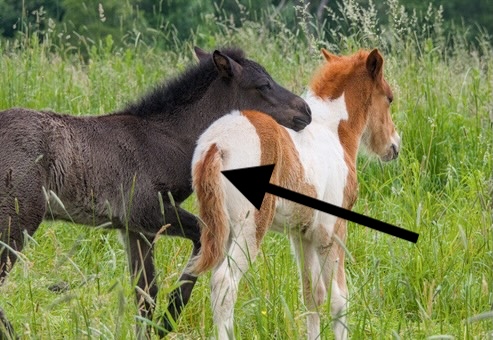
To test your foal we require a small sample of tail hair with roots.
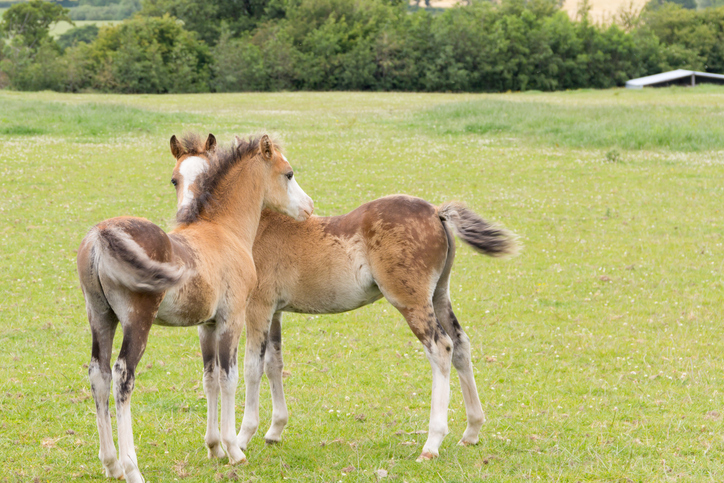
Older foals are almost always itchy, and you may be able to reach their tail if you offer plenty of scratches.
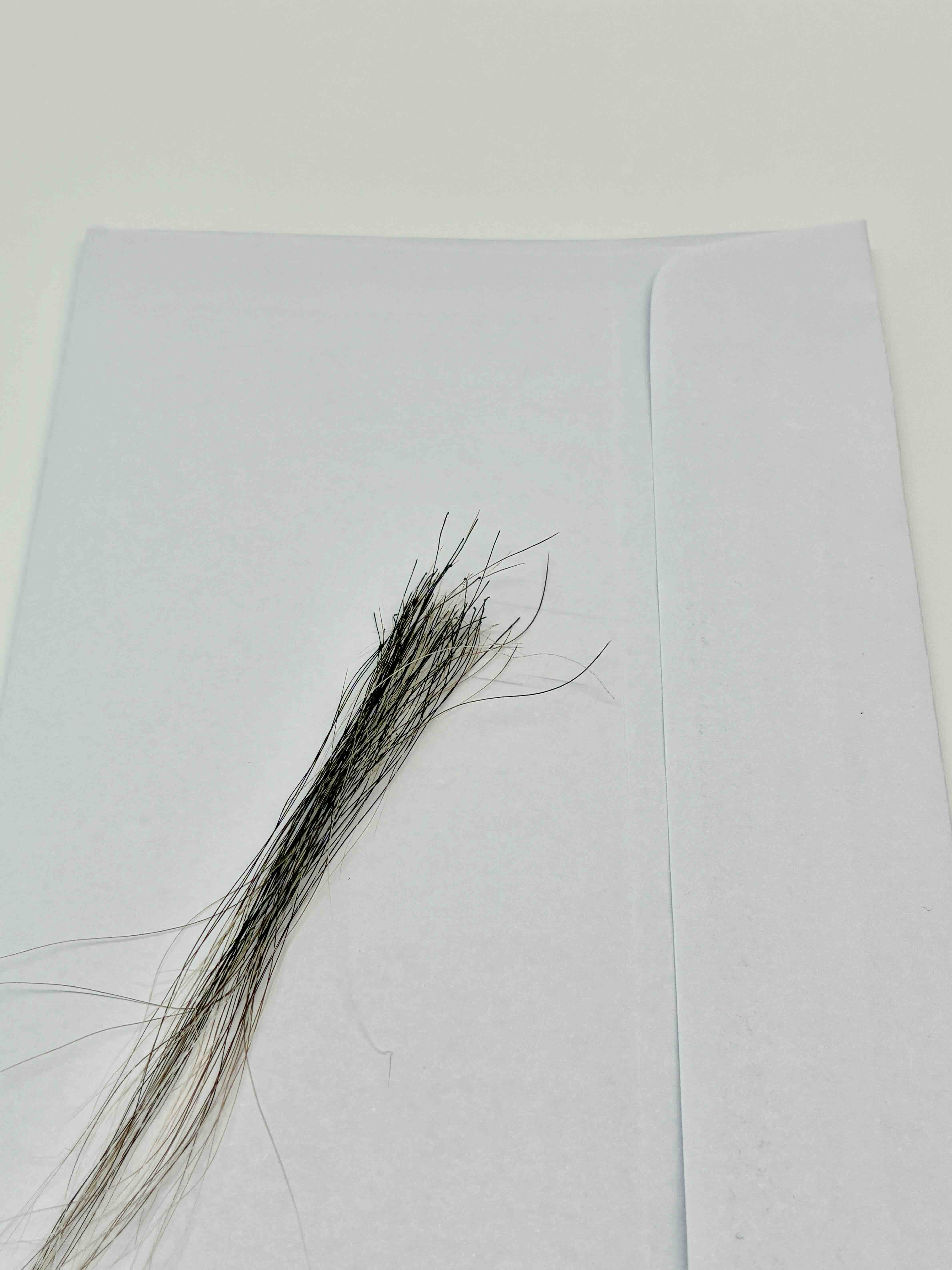
This is a large foal hair sample. You can take less hair than this. The white background help show that there are roots (the soft blobby ends) on quite a few hairs.
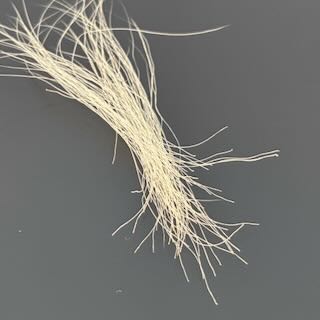
Using a black background can make it much easier to see whether there are roots on white or cream hair samples. This smaller sample is still big enough for us to run a wide range of tests.